Go to the content anchor

Toshimichi Yamada| logologo Institute of Cellular and Organismic Biology, Academia Sinica

Faculty
:::
aside menu open Faculty
:::

Article content area

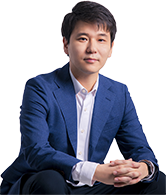
  • Profile photo of Toshimichi Yamada
    Toshimichi Yamada Professor Toshimichi Yamada ORCID
    Assistant Research Fellow
    • SpecialtyStem Cell Biology, Synthetic Biology
    • E-mailtoshiyamada@as.edu.tw
    • Tel02-2789-9541
    • Website Website
    • LabR107/ICOB
Professional ExperienceOpenClose
2026-present
Assistant Research Fellow, Institute of Cellular and Organismic Biology (ICOB), Academia Sinica, Taiwan
2020-2026
Postdoctoral Scholar, University of California, San Francisco (UCSF), USA (Lab of Wendell Lim)
2017-2020
Postdoctoral Researcher, The University of Tokyo, Japan (Lab of Nobuyoshi Akimitsu)
2016
Ph.D. in Chemistry, The University of Tokyo, Japan (Lab of Takeaki Ozawa)
Research InterestOpenClose

How does multicellular structure emerge? Developmental biology analyzes how nature builds tissues. Synthetic biology engineers biological systems. We work at the intersection of the two. Our fundamental question is: what rules do cells follow to build tissues? We answer it not only by observing natural development but by reconstructing and modifying it, because changing a system is a direct test of whether we understand it.

We call the mapping between signaling-field dynamics and cell-state transitions the morphogen code. Our central hypothesis is that tissue architecture is encoded by a quantitative morphogen code, defined by the combination of signal types, signal geometry, temporal dynamics, and feedback between progenitor state and signaling sources. Using stem-cell-derived embryo models and synthetic organizer cells that deliver defined signals in space and time, we pursue three directions:

•      Decode: how natural systems read signals. We break the “signal → fate” mapping into separable layers (input, field, interpretation) and measure each one.

•      Reprogram: rewriting how tissues are patterned. We use synthetic organizer cells and engineered niches to change the signals cells receive (their identity, timing, and spatial arrangement) and to rewrite how cells interpret them.

•      Explore: beyond natural development. Using the rules we decode, we explore forms that nature has not made, and design the signals to build them.

We deliberately alternate between analysis and synthesis: we perturb single circuit elements, then put the perturbation back into a self-organizing tissue to test whether our pattern-level prediction holds. Computational models (reaction–diffusion, agent-based, Bayesian inference, deep learning) connect the two. We then use these rules to rebuild natural development, and to model how it goes wrong in disease.


Decode: How natural systems read signals

Reprogram: Rewriting how tissues are patterned

Explore: Beyond natural development

Selected PublicationOpenClose

1.        Yamada T, Trentesaux C, Brunger JM, Xiao Y, Stevens AJ, Martyn I, Kasparek P, Shroff NP, Aguilar A, Bruneau BG, Boffelli D, Klein OD, Lim WA (2025) Synthetic organizer cells guide development via spatial and biochemical instructions. Cell 188(3): 778–795.e18. PMID: 39706189

2.        Ewe CK, Farnworth MS, Miller A, Navajas Acedo J, Oomen ME, Paci G, Widen SA, Yamada T (2025) Pathway to Independence: a forecast for the future of developmental biology. Development 152(19): dev205224. PMID: 41025354

3.        Trentesaux C, Yamada T, Klein OD, Lim WA (2023) Harnessing synthetic biology to engineer organoids and tissues. Cell Stem Cell 30(1): 10–19. PMID: 36608674

4.        Yamada T, Imamachi N, Imamura K, Taniue K, Kawamura T, Suzuki Y, Nagahama M, Akimitsu N (2020) Systematic analysis of targets of Pumilio-mediated mRNA decay reveals that PUM1 repression by DNA damage activates translesion synthesis. Cell Reports 31(5): 107542. PMID: 32375027

5.        Yamada T, Yoshimura H, Shimada R, Hattori M, Eguchi M, Fujiwara TK, Kusumi A, Ozawa T (2016) Spatiotemporal analysis with a genetically encoded fluorescent RNA probe reveals TERRA function around telomeres. Scientific Reports 6: 38910. PMID: 27958374

6.        Yamada T, Yoshimura H, Inaguma A, Ozawa T (2011) Visualization of nonengineered single mRNAs in living cells using genetically encoded fluorescent probes. Analytical Chemistry 83(14): 5708–5714. PMID: 21634804