
How Is a Stem Cell’s “Home” Built? Uncovering How Three Enzymes Work Together to Control Cell Fate
- Author:Yu-Ting Wang, Chun-Ming Lai, Ting-An Chen, Wei-Chen Chu, Chien-Han Kao, Chi-Hung Lin, Oyundari Amartuvshin, Kun-Yang Lin, Wan-Chen Huang, Ruey-Hwa Chen & Hwei-Jan Hsu
- Journal: EMBO Reports https://link.springer.com/article/10.1038/s44319-026-00939-6
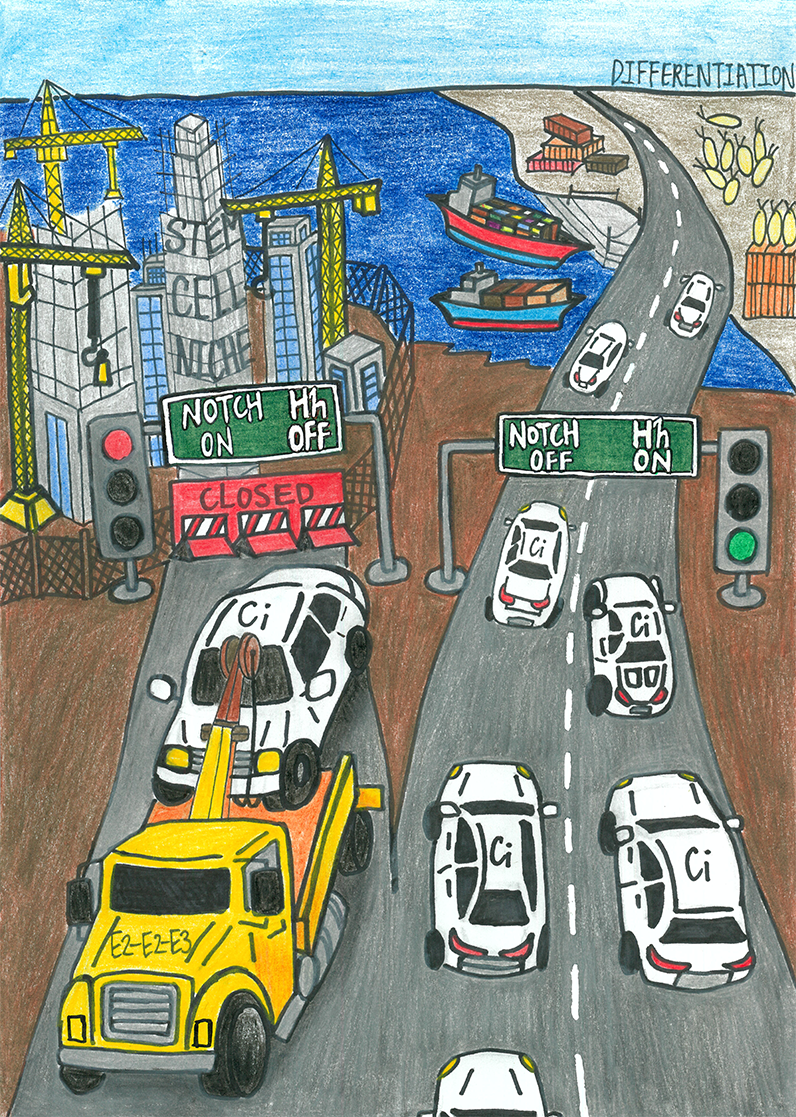
Stem cells have the remarkable ability to continuously divide and produce new cells. However, to function properly, they need a special environment, known as the stem cell niche, which acts like a “home” that supports and protects them. But how do cells decide which ones will support stem cells and which ones will help their offspring mature? Using the fruit fly ovary as a model, our research reveals that two important signaling pathways, Notch and Hedgehog, work against each other to determine these cell identities.A key discovery of our study is an unusual partnership between three enzymes, forming an E2–E3–E3 ubiquitination system. Scientists have long known that E2 and E3 enzymes work together to attach molecular “disposal tags” to proteins that need to be removed. We discovered that Notch signaling activates the E2 enzyme Ubc10, which teams up with two different E3 enzymes, Ari-1 and Cul3, to form a specialized protein-tagging system. Together, they target Ci, a key protein in the Hedgehog signaling pathway, for degradation. By turning off Hedgehog signaling, this mechanism allows cells to develop into specialized support cells that form the stem cell niche.Importantly, our study demonstrates how two E3 enzymes can cooperate in a living organism to regulate cell fate and stem cell niche formation. We also identified a similar protein machinery in human cells, suggesting that this mechanism may have been conserved throughout evolution. These findings reveal an unexpected level of cooperation within the protein degradation machinery and provide new insights into how cells establish their identities and build the environments needed to support stem cells.